
If you've ever balanced a laptop on a wobbly two-top while sitting in a chair clearly designed for a 15-minute espresso, you already know that not every workspace is created equal.
Remote work is here to stay. But "work from anywhere" doesn't mean everywhere works equally well. If you're freelancing, running a small business, or working remotely in Austin, you've probably rotated through three main options: your home office, a coffee shop, and maybe a coworking space. Each one has real tradeoffs — and after years of running a coworking space in East Austin and hearing hundreds of people's stories about where they work and why, we wanted to lay it all out honestly.
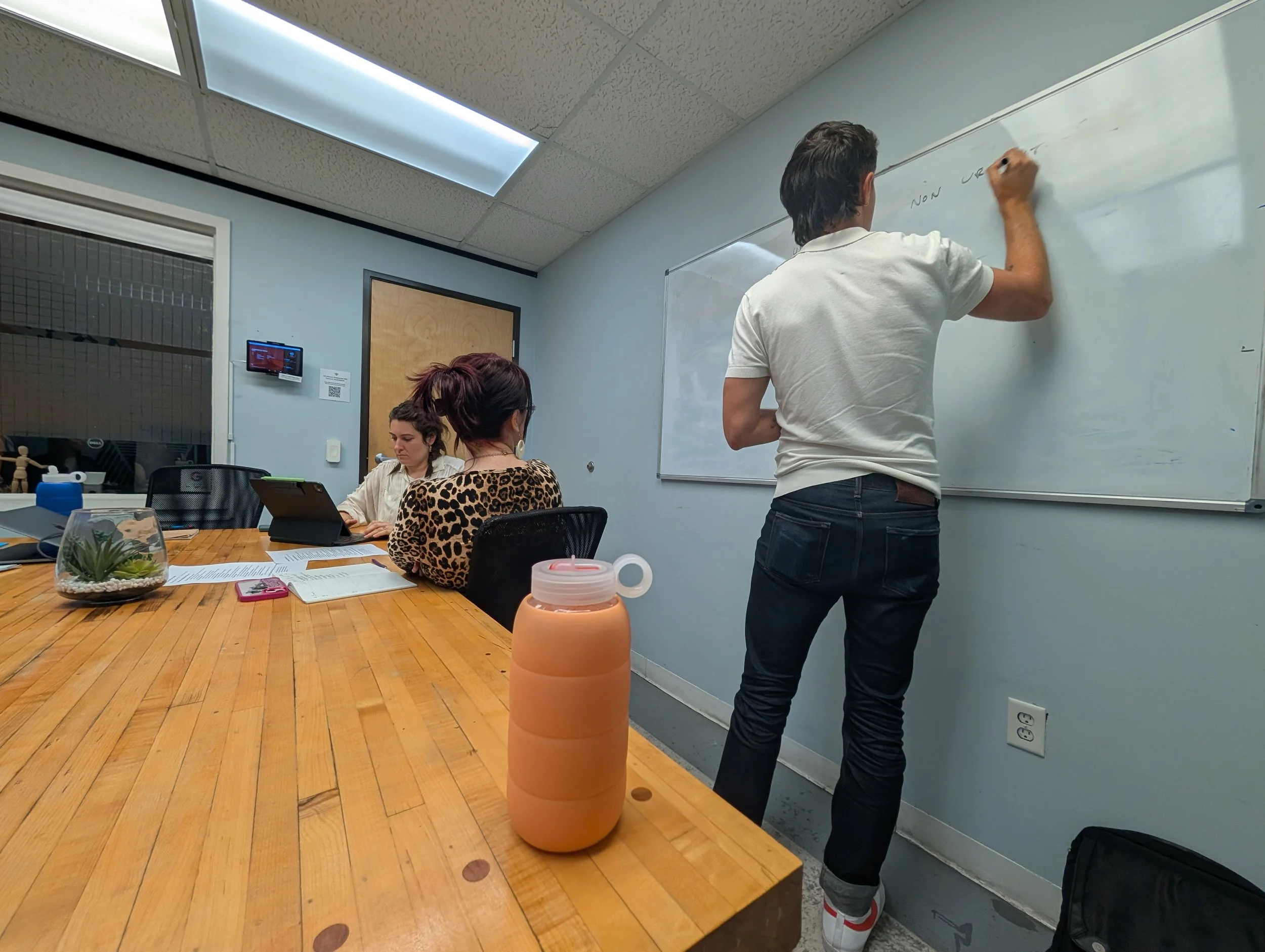
The Coffee Shop: Great Vibes, Questionable Logistics
Let's start with the one that looks best on Instagram. There's something genuinely appealing about working from a coffee shop — the ambient noise, the smell of fresh coffee, the change of scenery. Austin has incredible spots like Flightpath, Radio Coffee, and Bennu that people love working from. We get it.
But here's what people actually deal with:
The outlet hunt is real. This is probably the single most universal coffee shop complaint. You walk in, find a seat, open your laptop — and realize the nearest outlet is behind a couch on the other side of the room, already claimed by someone who got there at 7am. Some Austin cafes offer just a handful of outlets for dozens of people. Others have literally taped over theirs to discourage laptop campers. You end up choosing your seat based on proximity to power, not comfort or lighting or anything else.
The furniture isn't built for working. Coffee shops are designed for drinking coffee and chatting — not for eight-hour work sessions. That means you get bar stools at counter-height tables that wreck your posture, wobbly café tables barely wide enough for a laptop and a drink, and chairs that turn your lower back into a construction zone by 2pm. Ergonomics isn't part of the business model, because you're not really supposed to be there that long.
You're overstaying your welcome (and everyone knows it). Coffee shops are increasingly pushing back on remote workers who camp out all day. Nationally, cafes are restricting wifi to certain hours, limiting session times, and covering outlets. Even some of Austin's most laptop-friendly spots have unspoken expectations: buy something every couple of hours, don't take a four-person table for yourself, and don't take Zoom calls at full volume. There's a constant low-grade tension between "I need to get work done" and "I'm a guest in someone else's business."
The wifi is shared, slow, and insecure. Coffee shop wifi is fine for checking email. It's not fine for uploading large files, running video calls, or working with sensitive client data. Public networks are notoriously vulnerable — hackers can intercept data, set up fake hotspots, or exploit the lack of encryption. If you're handling anything confidential, you really shouldn't be doing it over the same wifi someone else is streaming Netflix on.
Your stuff isn't safe. Need to use the restroom? You're either packing up your entire setup and losing your seat, or you're asking a stranger to "watch your stuff" — which, when you think about it, means trusting a random person with your laptop, phone, bag, and everything on them. There's no locker, no secure area, and no one whose job it is to keep an eye on things.
It adds up fast. A $5 latte every two hours means you're spending $15–20+ per day just to sit somewhere. Over a month, that's easily $300–400. And that's before factoring in the parking situation around South Congress or East 6th.
The Home Office: Comfortable but Isolating
Working from home is the default for a lot of remote workers, and it does have some obvious advantages: no commute, your own fridge, and pants are optional. But the downsides are real and well-documented.
Loneliness is the biggest one. Survey after survey confirms it. A recent Gallup study found that fully remote workers report significantly higher levels of loneliness, sadness, and anger compared to hybrid or in-person workers. When your most meaningful social interaction on a Tuesday is saying "thanks" to a delivery driver, something's off. The casual hallway conversations, the lunch with a coworker, the random chat by the coffee maker — those disappear completely at home.
The work-life boundary evaporates. When your bedroom is ten feet from your desk, "logging off" becomes an abstract concept. You check Slack at 9pm. You eat lunch at your desk. You realize at 4pm that you haven't stepped outside. Nearly one in five remote workers say they struggle with work-life balance, and it often shows up as burnout, not productivity.
Distractions are different but constant. Kids, pets, roommates, laundry that's calling your name, a doorbell ringing — home has its own set of interruptions. And unlike an office or a coffee shop, there's no social pressure to look like you're working. It's easy to drift.
You lose professional infrastructure. No printer, no scanner, no conference room for client calls. Your "meeting room" is whatever corner of your apartment has a decent background for Zoom. And if your home internet goes down, your workday is just... over.
There's no separation between spaces. Psychologically, working in the same room where you sleep and relax makes it harder to be productive and harder to truly rest when you're off. Your brain doesn't get the environmental cue that says "this is work time" or "work is done."
The Coworking Space: Built for the Job
Full disclosure — we run one. So take this section with that in mind. But the reason coworking spaces exist is precisely because of the problems listed above.
The furniture is meant for working. Desks at the right height. Chairs that support your back. Monitor-height surfaces. It sounds basic, but if you've spent a full day hunched over a laptop on a coffee shop stool, you know it's not a given.
There are outlets everywhere. Every desk, every table, every work surface. You never have to think about whether your laptop will make it to 3pm. It's not a perk — it's the bare minimum of a functional workspace, and coworking spaces are the only option of the three that consistently delivers it.
The wifi is fast, dedicated, and private. No bandwidth competition with 40 other laptops. No public network vulnerabilities. You can take video calls, transfer large files, and work with client data without worrying about security. At Createscape, our network is built for work — not for background music streaming.
You can leave your stuff. Step away for lunch, use the restroom, run an errand — your things are secure. There's no laptop-guarding anxiety. Private call rooms, meeting spaces, and lockable storage mean you can work the way you would in a real office.
It solves the loneliness problem without the office politics. You're surrounded by other people who are working — freelancers, founders, remote employees, creatives. There's community and energy and the ambient presence of other humans, but without the mandatory team-building exercises or passive-aggressive kitchen notes. You get the social benefits of being around people without anyone scheduling a meeting that could've been an email.
It's a professional address and a professional environment. If you ever need to meet a client, take a call, or host a collaborator, it's a real workspace — not your living room or a noisy café. That matters more than people think.
It creates that boundary. You go to work, you leave work. Your brain gets the signal. Your home goes back to being home.
So Which One Is Right for You?
Honestly, it depends on what you need.
If you need a change of scenery for a few hours and you don't have sensitive work to do, a coffee shop is perfectly fine. Just bring a full battery and low expectations for ergonomics.
If you're disciplined, live alone, and don't mind the solitude, a home office can work — especially if you supplement it with social activities outside of work.
But if you're trying to do focused, professional work on a regular basis — and you want reliable internet, a comfortable chair, power at your desk, a secure environment, and other humans nearby — a coworking space is the only option that checks every box.
We might be biased, but we've also heard every version of this story from the 150+ members who work out of Createscape every month. Most of them tried the other two first.
Curious what it's actually like? Come try a free day at Createscape — no commitment, no pressure. Just a real desk, fast wifi, and an outlet that's actually within reach. Sign up for your Free Trial Day.